Saturday, May 13, 2017

mulching properly

PROPER MULCHING 
SAVES TIME, MONEY, AND PLANTS


 There are multiple types of mulch to choose from: Chips, nuggets or shredded as well as
color choices from natural to red or black.. 

Mulching your landscape has many benefits for your garden, but the reason most homeowners mulch is to give their property a dramatic finished look. Your plants and flowers pop out with mulch.


No only does mulch add impact, it also creates an outline that makes mowing faster and easier. 
Properly used mulch suppresses weeds, keeps the soil moist, and maintains the soil temperature. This will help keep your plants healthy and reduce maintenance, especially weeding during the summer months. 
Usually one or two inches of mulch with 5 inches of space between the base of trees and/or the stems of shrubs is a good rule of thumb. Three inches on areas that have never been mulched before will help suppress weed seeds from germinating.  


The main functions of mulch are to suppress weeds, maintain moisture and control
fluctuating soil temperatures.

Mulching trees and shrubs is a recommended cultural maintenance method with many benefits, yet it can literally kill plants if mulch is applied improperly.

VOLCANO MULCHING KILLS TREES AND SHRUBS
A mountain of mulch, piled high against the tree trunk, does not kill a tree immediately but will result in a slow death. Over-mulching is a waste of mulch and money. It is a leading cause of death for azalea, rhododendron, dogwood, boxwood, mountain laurel, hollies, cherry trees, ash, birch, linden, spruce, and many other landscape plants.


Mulching  properly has many benefits, but "volcano mulching" sets your trees and shrubs on the
path to a slow death.
    

How does over-mulching kill trees and shrubs?
·        Lack of oxygen to tree roots. This is especially common in the spring and the fall, which are critical periods for root growth, and during other wet periods. Symptoms may take several years to appear.

·        Inner bark death. This comes from the piles of mulch placed directly against the stems/trunks of trees and shrubs. (This can also happen to trees planted too deeply. Carefully follow directions when planting trees and bushes.)


All living things on Earth require water and oxygen, including plants.
Volcano mulching suffocates roots at the base of your trees. 


·        Fungal and bacterial diseases. Moisture is required to spread and reproduce these diseases. Trunk diseases gain a foothold into the moist, decaying bark tissue under the mulch. Once established, the disease organisms ultimately invade the inner bark, starving the plant and finally killing the tree.


Mulching protects trees from the 'dreaded lawn mower disease'
Damage done to the base of  trees from being hit by lawn mowers and weed whackers.
This is a major cause of death of  Dogwoods and other trees.


·        Excess heat. This is created when wet mulch starts to heat up and begins to decompose the lower bark. 

·       Rodents such as mice and voles. These creatures live under the warm mulch in the winter and chew on the nutritious inner bark. Often this goes unnoticed until the following spring when the "tree doesn’t look good”.


In newly mulched areas a layer of 2 sheets of  wet black & white newspaper
helps to suppress weed seeds and saves mulch.
  
Information in this article is from Rutgers Cooperative Extension Fact Sheet FS099 Deborah Smith-Fiola, Agricultural Agent, Ocean County

Happy Gardening,                                              
       James


Monday, March 6, 2017

African violets

                        AFRICAN VIOLETS                             (Saintpaulia)


Flowers have five petals with yellow centers.

African Violets have long been the most popular flowering houseplants in the country and will continue to maintain this distinction far into the future. African Violets are not  "true" violets but are a genus "Saintpaulia"  related 
to Gloxinia, originally from Kenya and Tanzania, Africa.


New varieties have flowers that can be ruffled or multi-colored.

One reason for its popularity is its ability to flower in indirect light and easy care. African violets are short plants with rounded or slightly pointed leaves with flower  stalks emerging from the center. Flower colors range from white, pink, red, purple and blue with a yellow center. There is also a trailing variety which is less well known. Flowers have five single petals although now double flower are available as well as fringed and multi-colors varieties which seem to be created every day. Even variegated leaves of white and green can easily be found.


 With short periods of rest, Africans violets flower throughout the year.

The abundant flowers bloom well with indirect sunlight all year long which help make African violets as popular as they are. They also prefer modern indoor temperatures of around sixty five degrees which is ideal. Most houseplants prefer cooler temps at night. Additionally a fully mature plant only requires a three to six inch pot making them ideal for window ledges, shelves or coffee tables. All these traits make African violets perfect flowering houseplants for almost everywhere in an apartment or house with enough indirect sunlight or  artificial fluorescent light.


Use the correct size pots as plants grow to help the roots to adjust.

Considered an easy to care for plant, it is important to remember that African violets come from a warm climate. Water them with room temperature water. Cold water causes yellow spotting on the leaves . Also avoid wetting the leaves when watering. Watering plants from the bottom is a good practice and lets them dry out between watering. Over-watering can cause root rot, the most common cause of death of all houseplants. Also avoid drafts. Move away from cold drafty windows and air conditioners.


Easy and fun to propagate, you can take a leaf with the stem from the center of the plant and root it in water or potting soil. The outer leaves are too thick and do not root easily. Once rooted African violets grow quickly to flowering size.


Once plants have rooted it's time to move them into the soil. 


Off shoots from the main plant are best removed and to their own pots.
Requiring a rich soil mixture, you can purchase African violet soil premixed or you can *blend your own, but they will not grow well in regular potting mix.


As the new plants grow you can add them to your collection or give them to friends as gifts.
African violets are excellent Mothers Day gifts. 

           For more information on African violets visit the website of the                            'African Violet Society of American' 
www.avsa.org 


Happy Indoor Gardening, 
James 

Thursday, December 29, 2016

Mourning Doves; Winter Bird Feeding

MOURNING DOVES 
(Zenaida macroura) 
 WINTER BACKYARD BIRD FEEDING


 Although millions of Mourning doves migrate South during the winter, many
remain in our area.

Mourning Doves are the most successful wild dove in North America, with a range from Alaska, Canada, Maine and as far south as Panama.


Mourning doves range extends as far south as Panama and the Caribbean    

Although most Mourning doves migrate south during the winter months, many stay in our area where they depend on back yard bird feeders for survival.


Joining other winter birds at feeders Mourning doves help clean the fallen seed
on the ground. 

Mourning doves feed on a vast assortment of seeds including weed seeds which makes it a valuable ally of farmers and gardeners. If you keep your bird feeders stocked Mourning doves will stay close, eating off the ground (gleaning) under feeders which helps keep that area clean.


Mourning doves tracking has proven that theses birds mate for life. 

Snow and ice make it difficult for these birds to scratch up seed, but there are a few things that you can do to help them. During the snowfall sprinkle seed on top to keep food in reach. If possible flatten an area and sprinkle the seed on that area. After a big storm I put cardboard on top of the snow and sprinkle the seed on top of that.


 I feed Mourning doves millet which is their favorite seed and black-oil sunflower seed because it is high in protein, also a favorite.
Mourning doves will utilize a heated birdbath for drinking water if you can provide it.


Water is the hardest resound for wildlife to find during the winter.  

Also known as 'Turtle Doves',Mourning doves are medium size birds around 5 to 6 ounces, with brown pointed wings and tail, white & black markings and a crescent on its neck. Males have blue and pink highlights on the head and around their eyes. The pointed falcon like wings give them the ability to reach reach speeds of 40 to 55 miles per hour.


Once in flight these birds fly fast and straight which makes it a hard target
for hunters to hit. One million are killed every year as a game bird. 
Mourning doves are related to the now extinct
 'Passenger pigions' once used to deliver messages.


Once traveling in flocks a mile long, Passenger Pigeons are now extinct. 


During takeoff Mourning doves flapping wings make a loud whirling sound and their strong feet enable then to push off the ground quickly. The call from the male is a hollow mournful coah, cooo, cooo.


Watching and listening to Mourning doves take flight is always fascinating.

Habitat is open farmlands, towns, roadsides, open grasslands and scrubs. 

I'll provide more information on Mourning Doves mating and raising their young in the spring.

Enjoy your garden all year long, 
James


Thanks to Cornell Lab of Ornithology, Audubon Field Guide and Wild Birds Unlimited
for the information in this article.

Saturday, December 3, 2016

Wreaths Across America


WREATHS ACROSS AMERICA DAY
Saturday,December 14, 2019 
Rahway Cemetery, 8 AM
Meet at Merchants & Drovers Tavern
Saint Georges and Central Ave.


Each December on 'National Wreaths Across America Day', active duty service personal, veterans and thousands of volunteers gather at Arlington National Cemetery, as well as over 1100 additional locations in all 50 U.S. states, at sea, and abroad.


A photograph is worth a thousand words. 

Their mission statement, to Remember, Honor and Teach is carried out by coordinating wreath-laying ceremonies at every grave while reciting the name on the grave stone out loud. 


Now Wreaths Across America  takes place the second or third Saturday in December. every year.


This tribute to our veterans and fallen heroes was founded by 'Morrill Worcester' of Harrington, Maine.


Founder Morrill Worester with his wife
Karen Worester, Executive Director 

In 1992 with the endorsement of Senator Olympia Snow and the volunteer services of townspeople, trucking companies and veterans, Mr. Worcester sent hundreds of wreaths to be laid on graves at an older section of Arlington National Cemetery where there were less visitors and soldiers were being forgotten.


There are local memorials at a cemetery near you.
For locations go the the website listed below and put in your zip code.  

This annual tribute went on quietly every year until 2005 when a photograph of snow covered wreaths placed on grave stones circulated the Internet. 


This photograph of snow covered wreath brought
Wreaths Across America to the attention of the American people.  

Two years later in 2007  'Wreaths Across America' became a non-profit 501-C3.


Nowadays ceremonies are held in almost all areas of our nation.   


In 2008, wreaths were laid at 300 locations in every state, Puerto Rico and 24 overseas cemeteries.


There are volunteer  opportunists listed on the website and donations help with
transportation and other expenses. 

In 2014 700,000 wreaths were placed at over one thousand locations, and this new tradition continues to grow.  


You can watch a video of this ceremony or get more information on the Internet:

Thursday, November 24, 2016

Thanksgiving

A BRIEF HISTORY OF THANKSGIVING

After a sixty six day journey seeking religious freedom, the Pilgrims arrived in Massachusetts, far from their destination along the Hudson River. 


The Mayflower left England with 102 passengers. Of that only 35 were seeking freedom
from the Church Of England which they thought was corrupt. The remainder came seeking wealth.

With no suitable place to land most of the Pilgrims spent the first winter on board the Mayflower where many died from hunger and disease.


The Mayflower steered off course of the Jamestown settlements and
landed far north at Plymouth, Massachusetts. 

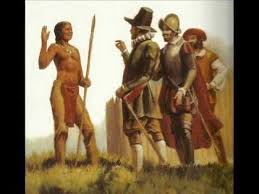
In early spring when they arrived on land they were surprised to be greeted by an ‘Abenaki Indian’ who already spoke English. A few days later he returned with ‘Squanto’ a Patuxet Indian who also spoke English*.


The Pilgrims were surprised to be greeted by English speaking
Native Americans.

Squanto took pity on the new settlers and taught them how to farm, gather wild berries, fish in the rivers and hunt. He also taught them how to avoid poisonous plants.


When Columbus "discovered" the new land, American Indians had been farming
 here for 4 thousand years. 

Squanto forged an alliance between the Pilgrims and the local Indian tribe, the Wampanoag.

The main three farm crops of the Wampanoag were corn, beans and squash. Wampanoag also farmed watermelon and sunflowers, gathered blueberries, cranberries, strawberries and hunted game. 


Grown in the same plot, the corn would grow tall, the beans would grow up using corn as a trellis
and the pumpkins would ramble on the ground where its fruit was protected from burning.

They taught the pilgrims how to collect maple sap and turn it into maple syrup.

Maple sugar is likely the oldest agricultural product in North America.
Before the Europeans arrived, native people had already perfected the craft. 

After the first successful corn harvest in November 1621 the leader of the Pilgrims, Governor William Bradford declared a celebration feast, which today is known as the First Thanksgiving.


It was the successful harvest of corn that saved the early settlers from
future winters of starvation.

Although there were earlier gatherings to “Thank God Almighty” in the colonies, one on December 4, 1619, it is the Pilgrims Thanksgiving we remember today. Thanksgiving gatherings were days of prayer, whereas the pilgrims included feasts.


The Wampanoag  Indians and the Plymouth settlers remained friends for over 50 years.
Later arriving Puritans seeking land and wealth would bring an end to peace.


The 50 surviving Pilgrims and 90 Wampanoag Indians had a three day feast which included five deer donated by the Wampanoag chief.


Squanto was the main guest of honor at the First Thanksgiving,

Today’s modern holiday feasts are marked by pies and sweet treats, but there were no sweets at the first Thanksgiving because the Pilgrims had already eaten all the maple syrup.

Throughout the decades afterwards Americans would occasionally celebrate a ‘National Day of Thanksgiving’.


In 1863 during the Civil War, President Abraham Lincoln established our annual Thanksgiving Day on the fourth Thursday of every November.


Thanksgiving has been an annual event every year since 1863.


*Before the arrival of the Pilgrims, Squanto and many other members the Patuxet tribe were captured by the British and brought back to England as slaves. The Patuxet tribe members remaining in America died from small pox transmitted by the English. Squanto who now spoke English was able to escape and return to America as a stowaway on another ship. Squanto died on November 30, 1622.  He was buried at Burial Hill, Plymouth, MA.  


Which brings us to our modern Thanksgiving day celebrations.


Happy Thanksgiving, James                                                   

Sunday, November 20, 2016

Ornamental Kale


ORNAMENTAL KALE
FLOWERING CABBAGE 
Brassica oleracea


Plantings of Ornamental Kale and Flowering Cabbage add
drama to this city scape on a rainy winter day.

After Chrysanthemum flowers fade away and squirrels have eaten the pumpkins, ‘Ornamental Kale’ or ‘Flowering Cabbage’ still brings color to the late autumn garden. These beautiful plants are prized for their brightly colored foliage which becomes more intense when temperatures drop below 50 degrees. 


As the tempatures drop,below 50  colors in the leaves become more intense. 

Ornamental Kale is in the same family as cabbage, broccoli, cauliflower and collars.  Although flowering kales are edible*, it is not delicious and is best used as a garnish on the bottom of the plate.


Flowering cabbage is easy to indentify by the rounded leaves with
resemble our common ediable cabbage. 


When you buy Ornamental kale at your local garden center select plants close to the size you want them when mature. Once root bound they will not grow much more than they already have in the pot.


Ornamental Kales have many different leaves with more being introduced every year. 

When you bring it home, plant them in the ground or transplant into another pot. Bury stems so that the lowest leaves are flush with the soil surface.
Ornamental kale requires a sunny location in a moderately moist rich soil.        Keep the plants moist. Kale and cabbage do not do tolerate drying out and will lose vigor quickly. Fully grown plants are approximately 15 inches tall and one foot wide.


The key to longivity is regular watering. 

When colder weather arrives pigments in the leaves will brighten, white pink or red. This is when they at the peak of their display. In addition to color kale leaves have many shapes, curly, frilly or ruffled.


The pure white leaves of this Kale would be the focal point of any winter garden. 


There are many different cultivars available today, ‘Peacock’, ‘Pigeon’, ‘Osaka’ and the ‘Tokyo’ to name a few. Home gardeners have a large selection to choose from. Pick the plants most pleasing to your eyes.


It is the colors and patterens on the leaves of Flowering cabbage  that gardeners find appealing. 

You can start seeds ten weeks before the expected frost date or purchase plugs at your local garden center. Growing them can be fun but you will have to battle beetles and insects to prevent them from chewing holes in the leaves. I only have space for a few pots so I use this opportunity to support my local garden nurseries.


If they survive the winter both the kales & cabbages will flower in the spring.

*As noted above, ornamental kale and flowering cabbage plants are edible, but they are tough and bitter.  To reduce their bitter taste, boil them, discard the water and then boil or sauté them in olive oil prior to serving.
The information in this article is from University of Wisconsin-Extension Garden Fact s (XHT1163) Susan Mahr, UW Horticulture Agent.


Happy gardening,

James