Tuesday, July 9, 2019

Monarchs & Milkweed


   NATIVE MILKWEED & MONARCH BUTTERFLIES


Handle all butterflies with care. If you would like a photo-op with one, gently catch it.
Then put it in a loose paper bag and refrigerate for only a few minutes. This technique will slow your butterfly
 down long  enough to take your photograph. Soon it will warm up and fly off. 


Over the centuries Monarch Butterflies have captivated humans with their bright colors and annual migration during which they often appear in large groups, called a 'roost'.

  The Monarchs actually migrate alone and not in flocks like birds.  On this journey Monarch populations depend on Native North American 'Milkweeds', the only plant on which they lay their eggs.


A Monarch butterfly egg attached to the underside of a milkweed leaf 

In our area, with modern construction taking more land for development, Milkweed plants are rapidly disappearing.  In rural areas and farm lands, the use of herbicides is also taking its toll on Milkweeds.  

This sadly has a negative effect on the Monarch population.  They have less host plants for their eggs and caterpillars.
Milkweeds (Asclepias) get their name from the sticky white sap that oozes from the leaves when they are damaged.

More than 100 species of this herbaceous perennial are native to the U.S. and Canada.  Many have adapted to different regions of the country and a wide range of climates and terrains, from deserts and rocky areas to marshes and open prairies. Some species grow exclusively in specific regions while others will thrive in just about any habitat.

Milkweed is both a food source and the host plant on which the Monarch lays her eggs, depositing them on the underside of the leaves.


The monarch caterpillar lives its life cycle eating  milkweed plants, absorbing both
nutrients and the toxins that will protect it from predators throughout its life. 


The caterpillars then feed on the leaves after hatching, but cause no permanent damage to the plant. In turn, the toxic chemicals contained in the sap of Milkweed plants make both the caterpillars and adult butterflies unappetizing and even toxic to predators.


The chrysalis is both functional and beautiful, looking more like jewelry rather than a 
cocoon hanging on the leaves.

This technique has worked so well for Monarchs, it was long believed Viceroy butterflies had evolved with similar colors and markings to mimic the Monarch and fool predators that they too are unappetizing.   Recent studies now show Viceroy butterflies are also toxic.

During Monarch migration flight is fueled by 'nectaring' on the flowers and is punctuated by laying eggs on Milkweeds. To grow and sustain each generation, Milkweed is the only food needed.


These migrating butterflies and gathered in a "roost" to feed and mate.
Soon they will disperse and continue to migrate individually. 

Of all the native Milkweed species only one is considered highly desirable for our North American gardens, Butterfly Weed, (Asclepias tuberosa) .


The "common" milkweed is considered very desirable for northeastern gardens..
In hues of orange or golden yellow gardeners are encouraged to find a place for these in their gardens.    

This showy cousin of Milkweed is one of the most ornamental varieties, featuring clusters of vibrant orange flowers.  The blooms are perched atop the ends of the stalks so they create a prominent display even if your plants are located at the back of a flower bed.  Butterfly Weed is slow to establish but will brighten your garden for years to come.  There is also a golden yellow variety.

Butterfly Weed has a deep taproot which helps it survive periods of drought. The downside is that it cannot be successfully transplanted.  When you select a spot to plant it, take this into consideration.  Once in its space you should leave Butterfly Weed where you planted it.  The vibrant color, as mentioned, will stand out in your garden.  If you have space, plant more than one because although Monarchs migrate alone they often gather in route to feed and mate.  These 'roosts' are spectacular when seen.


There are many pretty milkweeds that soon outgrow their space making them
a high maintenance plant.

Milkweed’s highly fragrant and nectar-rich flowers are an enticement for other pollinators as well. Frequent visitors include native bees, honey bees, many other types of butterflies, and hummingbirds.

TROPICAL MILKWEED  
                                     
Plan to Save Monarch Butterflies Backfires
When evidence emerged that Monarch Butterflies were losing the Milkweed they depend on due to the spread of herbicide-resistant crops in the United States, people across the country took action, planting Milkweed in their own gardens.  Many gardeners planted the 'non-native' Tropical Milkweed because of its beautiful bright colors.  This plan backfired in two ways. Since Tropical Milkweed flowers longer into the late autumn and in some parts of the country throughout winter, it fools the Monarchs into staying in our area longer, endangering the butterflies’ iconic migration to Mexico.


Tropical milkweed has brightly colored flowers which makes it attractive to gardeners,
but unfortunately this species has many disadvantages to migrating Monarch butterflies in the Northeast.


Additionally Tropical Milkweed holds onto its original leaves though its entire life causing overuse by Monarchs and increasing the odds of the caterpillars becoming infected with a crippling parasite.


Gardeners are asked to not plant Tropical milkweed, or to pot it up in early
autumn and overwinter it indoors.  This will help keep the butterflies on their long annual
migration to Mexico.

How can you to help solve this problem ? (1) Plant native Milkweeds.   (2) If you have Tropical Milkweed prune half the plants in mid-season, then prune the other half when the first has recovered (3) In late summer Tropical Milkweed can be potted up and overwintered indoors. This is because tropical plants get plenty of rain so they do not require a deep taproot like its North American cousins.

Happy Butterfly Gardening, James

Thanks to the all entomology experts, butterfly organizations  and the photographers whose love of Monarchs made this article possible.Top of Form

The life span of a monarch butterfly is six to seven weeks.


Tuesday, May 28, 2019

Tomatoes


TOMATOES

The tomato is native to Central & South America.  While its culture is ancient,  tomatoes have only reached their present prominence since the mid-1800's.


Medium sized tomatoes can be grown in a 5 gallon bucket if you have poor soil
or only a small space with 6 hours of sunshine a day.

There are two types of  tomato plants, 'Determinate' or 'Indeterminate'.  Their growing habits, flowering and harvest is the major difference between them.

Determinate tomatoes are low growing plants that require less staking, but they flower only once and are all ready to harvest all at the same time.  If you plan to preserve them you have a limited window of opportunity. 

Indeterminate tomatoes grow taller so they require staking, pruning and care during the season.  The advantages of indeterminate plants make them worth the effort to true tomato lovers.  Most important, the flavor is better in these tomatoes.  Secondly they have a long harvest season, constantly flowering throughout the season and insuring a good harvest from early summer until the frost.


Proper pruning of suckers which are unproductive leaves, forces growth into more valuable
areas of the plant such as the roots and fruit. 


Indeterminate tomatoes need constant pruning, removing the stems which do not produce fruit but absorb energy from the plant.  These stems are called 'suckers' . 

Staking your plants makes it easier to detect problems, to harvest your crop, and will keep fruit from touching the ground where it can rot.  Staking also improves air circulation which helps control disease and fungus problems.

Unfortunately tomatoes can host many diseases that can devastate your harvest just when you are looking forward to it.  There are a few things you can do at planting time to help limit the chances that will happen to you.

Rotate your crops.  Plants your tomatoes in a different spot than you planted them last year.  This practice prevents diseases that can remain in the soil, which can contaminate it for years into the future. 


The first signs of  tomato disease is often in the leaves. This can appear on the bottom or top of the plant,
wilting, yellow or brown leaves should be removed quickly.
Contact your local county cooperative extension for advice.  Photographs can be helpful. 

 If  last year you had a tomato problem don't replant tomatoes, eggplants or peppers  in the same area.
Take a soil test from your county cooperative extension every three years for nutrient requirements.
 You can add ground egg shells to the soil to prevent 'blossom end rot'.

Disease resistant varieties are available. These are marked on the label and your local greenhouse personnel will be able to help you locate them.


Plant several different varieties.  Not only will this help prevent disease from infecting all of your plants, it will also give you more flavor and most likely a longer and more bountiful harvest.

Proper and consistent watering will greatly improve your harvest. Tomatoes require less water than you might think, just one inch a week. Over-watered tomatoes lack flavor and meatiness. 


This water logged tomato could have been saved by proper watering or harvesting before
a heavy rainfall.  Still edible, it will lack firmness & flavor. 

Although we cannot control rainfall, we must take it into consideration when hand watering.  A rain meter, either bought or home-made, can be very helpful. It can be as simple as dipping a ruler into a bucket.

Mulching with black or red plastic, or chopped leaves will control weeds and maintain moisture. This will help keep the soil cool during the heat of summer.  

Although we know tomatoes like it hot and sunny, they stop producing fruit when temperatures reach above 90 degrees. This can diminish your late harvest.


Heirloom tomatoes have regained popularity in recent years. They add flavor and interest
to your harvest but they have not been hybridized for disease resistance. 


Container gardening is a good choice if you have had disease problems in the past.  A simple five gallon bucket with holes drilled in the bottom can be a good choice for this. This system works best with medium size or cherry tomatoes.

For more information on growing tomatoes contact your 
Local County Cooperative Extension Service. 

Happy Gardening, James


Thursday, May 16, 2019

COYOTE


COYOTES

Just as deer are now often seen in our area, coyotes have also expanded their range, living and hunting in our parks and woodlands. If you have deer, coyotes are most likely in the area.


If seen in the wild coyotes stand out, looking more like a thin wolf than a domestic dog.

Scared and elusive of humans, most coyotes are never directly seen by the public. In the west, howling is a sure sign there is a pack in the region, but adjusting to their new environments most coyotes do not howl in urban areas. This makes their presence much harder to detect. They can sometimes be heard howling along with fire engines.
Coyotes have been sighted in northern Central Park
 and the Bronx. 


 Coyotes roam our parks and neighbors but are seldom seen by humans.
Their natural fear of humans is essential for survival.

Coyotes are a natural predator to much of the wildlife we find in our area; rabbits, rodents, groundhogs, Canada geese and deer fawns in the spring.  This helps keep down the populations of these animals which can become a nuisance.

Sadly coyotes will also take pets, small dogs and cats. If you live in an area where coyotes might roam take extra caution, especially at night. Fencing in your yard and keeping cats indoors will help avoid heartbreak. Missing cats are one of the first signs of coyotes in the area.


Coyotes are one of the few predators still active in our areas. They help cull the populations of other
animals and are on top of the food chain. 

Some Eastern coyotes have fur that is black or reddish. This hybridization was caused by coyotes interbreeding with domesticated dogs.
Coyotes mate is autumn which is when most sightings occur and they live in packs of as many as six. 
               

IF YOU SEE A COYOTE DO NOT TURN YOUR BACK 
AND DO NOT RUN AWAY

Coyotes can reach a speed of 40 MPH. 
Instead, stand tall and straight and never look away. Clap your hands, wave your arms, scream, shout, and if possible throw rocks and sticks at it. This will scare it away and help increase its fear of humans. Do not chase coyotes.  If cornered they will turn on you. Thankfully, coyotes are afraid of humans and will quickly scurry away. 


Coyote females can mate with domestic adding color to their fur.
They are still wild animals and should be respected and feared as such.  


Wednesday, March 13, 2019

NATIVES


 Native American Plants
'NATIVES'

There is a renewed interest in growing 'native' plants throughout the nation. Although gardens go though trends of what is popular at the time, there are many good reasons for planting some natives everywhere we can.


Over the centuries native plants have adapted to their environment; our soil and weather making them more disease resistant and easier to take care of. 


Monarchs butterflies lay their eggs on native Milkweeds.
The caterpillars then hatch and feed on these plants until they are ready to transform by metamorphosis
into an adult butterfly. 

Native plants and insects have evolved in a symbiotic relationship with flowers perfect for their pollinators. Now it is impossible for Monarch butterflies to survive without the native milkweed plants on which it lays its eggs.

The basic definition of 'native' is any plant growing in a habitat without human interference, or New World plants that were growing here before the arrival of Europeans.


Black and Yellow Swallowtail butterflies lay their eggs
on plants like parsley and dill.
I plant these herbs along side flowers to attract the beautiful  creatures to my garden.


There are gardens and meadows devoted to natives as well as pristine habitats such as 'The Great Swamp' in Basking Ridge, NJ.  

Rain Gardens, now popular to help reduce flooding, utilize natives because of their hardiness and ability to filter toxins from the water and soil.

The native plant movement has many followers who are devoted to 'native only' gardens. 


For mainstream gardeners, however, a blend of natives and modern plants with a few annuals is much more practical, especially since  we have invested time and money over the years.

Introducing natives to your garden can be as easy as planting a few native bulbs, such as the 'Turks Cap Lily'.  An old fashion lily that blooms in June with elegant speckled orange or white flowers that drip downward. These lilies are so beautiful they are now planted in gardens all over the world.


Turks Cap lilies, native to the U.S. are now grown all over the world.
A bulb,like this flower will reappear for years to come.  


If you have space and a dramatic setting, native 'Witch Hazel' comes into bloom with yellow blossoms in March when nothing else is in bloom.


Native Witch Hazel brings a dramatic effect to the winter garden.  


'American Beauty Bush' has a remarkable show of lavender berries streaming down its stems in early autumn.


The purple berries of American Beauty Bush are breathtaking while the
tiny white flowers are an important food source for native pollinators. 

During late autumn our native 'Winter-berry' holly drops its leaves and displays bright red berries along its branches deep into winter.


Females Winter-berry hollies require a male planted close for the most successful
pollination, creating the best display of berries. 

These are just a few of hundreds of different native plants that you can add to your garden.
When planting native shrubs, flowering plants, and bulbs think of its space for the long term. Many gardeners like to put in a plant and if they change their mind, just dig it up and move it, sometimes just a few feet. Many natives have deep taproots which makes them drought resistant but impossible to move successfully. 

Research your plant's requirements for sunlight, water and soil before planting to give it a proper start. Proper sunlight increases the energy plants require to produce more flowers.

I encourage everyone to plant a few natives in their garden.  If you are at a garden fair or garden center, visit the Native Plants table, or you can find them in catalogs and on the Internet. If every garden has a few native plants, the benefits will ripple though our communities and environment.


American Goldfinches will gladly visit  a garden with Cone-flowers.
Native cornflowers have the best overall effect, but not all cone-flowers are natives.

We all enjoy showing our gardens to family and friends. When we do it's always fun to point out "this is a native".


Happy springtime,                                                    James


Tuesday, January 22, 2019

Winter Bird Feeding - SUET


WINTER BIRD FEEDING - SUET


Winter is hard on all the native birds that stay in our area.  By the time January arrives most seeds have already been eaten off the ground and berries have fallen from the trees and shrubs.  Luckily for our feathered friends, winter back yard bird watching is now one of America's favorite hobbies.  We spend millions of dollars every year feeding wild birds in order to attract our winged friends within easy view.


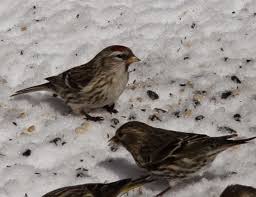
Flocks of over wintering birds are attracted to back yard bird feeders.
In attention to the common English Sparrows then are many native species such as Yellow-Crowned
sparrow that visit back yard bird feeders.  

Birds with diets that depend mostly on insects have the hardest time finding enough proteins and calories in other food sources such as fruit and seeds.  For these birds 'suet' is extremely valuable.

Suet is a winter bird food made from animal fat that is easily digested and metabolized by many birds; it's a high-energy food, especially valuable in cold weather.  Suet is particularly attractive to woodpeckers, nuthatches, chickadees, blue jays, tree creepers, and starlings when they visit feeders.  Of course
 squirrels  love suet and will gobble every bite if permitted.


Red-bellied Woodpeckers make daily visits to gardens with suet.
This is a female. The male has a red head also.

Suet cakes are sold almost everywhere we shop.  Garden shops, hardware stores, Christmas Tree Shops, Tractor Supply and even our local grocery stores.  I try to find suet cakes at the best price and stock up on them.  They can be stored in a cool spot or put in a freezer for long term storage.

Commercial suet feeders are available, and are an inexpensive investment.  They have a latch to close them but I also use a twist tie to prevent squirrels from opening the cage and knocking the cake on the ground. 


The White-breasted Nuthatch is amazing to watch walking up and down trees. 

Place the suet in feeders or net onion bags at least five feet from the ground to keep it out of the reach of dogs.

Do not put out suet during hot weather as it can turn rancid.  During hot weather the dripping fat can damage natural waterproofing on bird feathers causing permanent damage and a shorter life; not what we are hoping for when we feed birds.


This Red-bellied woodpecker clings easily to suet feeders hung upside down.

Today suet cakes come in a wide variety of ingredients and flavors.  Everything from citrus., blueberry or hot chili. The birds are coming for the fat, so the simpler the indigents, the better. If I find a suet with corn I put it back.  Corn is the least nutritional "filler" with only two percent  protein.


It is possible to make your own suet from leftover fat.  You can find information on how to make it on the internet and Youtube.  


I have the fattest squirrels in town, but hanging the suet feeders upside down with a baffle limits the
amount they can gobble up before falling off.  


Squirrels, starlings and other large birds will scare away the birds we want to attract. I use a simple trick that helps avoid or limit this problem.  Hang your suet cake feeder upside down. When I unwrap the suet I only take off the top wrapper, leaving the plastic tray on the rest of the cake. Place the suet in the feeder with the exposed suet facing down. 


Two local native woodpeckers look alike.
The Downy woodpecker and the Hairy woodpecker are  tricky to identify, but the
Hairy is a little bigger. The males of both species have a red cap.


This makes it difficult for the larger birds to hang on for long and they soon search for an easier food supply. The smaller birds are able to cling upside down and have no trouble eating the suet.

Happy back yard bird watching,                                                                James