Wednesday, March 13, 2019

NATIVES


 Native American Plants
'NATIVES'

There is a renewed interest in growing 'native' plants throughout the nation. Although gardens go though trends of what is popular at the time, there are many good reasons for planting some natives everywhere we can.


Over the centuries native plants have adapted to their environment; our soil and weather making them more disease resistant and easier to take care of. 


Monarchs butterflies lay their eggs on native Milkweeds.
The caterpillars then hatch and feed on these plants until they are ready to transform by metamorphosis
into an adult butterfly. 

Native plants and insects have evolved in a symbiotic relationship with flowers perfect for their pollinators. Now it is impossible for Monarch butterflies to survive without the native milkweed plants on which it lays its eggs.

The basic definition of 'native' is any plant growing in a habitat without human interference, or New World plants that were growing here before the arrival of Europeans.


Black and Yellow Swallowtail butterflies lay their eggs
on plants like parsley and dill.
I plant these herbs along side flowers to attract the beautiful  creatures to my garden.


There are gardens and meadows devoted to natives as well as pristine habitats such as 'The Great Swamp' in Basking Ridge, NJ.  

Rain Gardens, now popular to help reduce flooding, utilize natives because of their hardiness and ability to filter toxins from the water and soil.

The native plant movement has many followers who are devoted to 'native only' gardens. 


For mainstream gardeners, however, a blend of natives and modern plants with a few annuals is much more practical, especially since  we have invested time and money over the years.

Introducing natives to your garden can be as easy as planting a few native bulbs, such as the 'Turks Cap Lily'.  An old fashion lily that blooms in June with elegant speckled orange or white flowers that drip downward. These lilies are so beautiful they are now planted in gardens all over the world.


Turks Cap lilies, native to the U.S. are now grown all over the world.
A bulb,like this flower will reappear for years to come.  


If you have space and a dramatic setting, native 'Witch Hazel' comes into bloom with yellow blossoms in March when nothing else is in bloom.


Native Witch Hazel brings a dramatic effect to the winter garden.  


'American Beauty Bush' has a remarkable show of lavender berries streaming down its stems in early autumn.


The purple berries of American Beauty Bush are breathtaking while the
tiny white flowers are an important food source for native pollinators. 

During late autumn our native 'Winter-berry' holly drops its leaves and displays bright red berries along its branches deep into winter.


Females Winter-berry hollies require a male planted close for the most successful
pollination, creating the best display of berries. 

These are just a few of hundreds of different native plants that you can add to your garden.
When planting native shrubs, flowering plants, and bulbs think of its space for the long term. Many gardeners like to put in a plant and if they change their mind, just dig it up and move it, sometimes just a few feet. Many natives have deep taproots which makes them drought resistant but impossible to move successfully. 

Research your plant's requirements for sunlight, water and soil before planting to give it a proper start. Proper sunlight increases the energy plants require to produce more flowers.

I encourage everyone to plant a few natives in their garden.  If you are at a garden fair or garden center, visit the Native Plants table, or you can find them in catalogs and on the Internet. If every garden has a few native plants, the benefits will ripple though our communities and environment.


American Goldfinches will gladly visit  a garden with Cone-flowers.
Native cornflowers have the best overall effect, but not all cone-flowers are natives.

We all enjoy showing our gardens to family and friends. When we do it's always fun to point out "this is a native".


Happy springtime,                                                    James


Tuesday, January 22, 2019

Winter Bird Feeding - SUET


WINTER BIRD FEEDING - SUET


Winter is hard on all the native birds that stay in our area.  By the time January arrives most seeds have already been eaten off the ground and berries have fallen from the trees and shrubs.  Luckily for our feathered friends, winter back yard bird watching is now one of America's favorite hobbies.  We spend millions of dollars every year feeding wild birds in order to attract our winged friends within easy view.


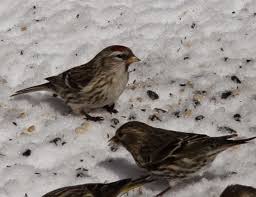
Flocks of over wintering birds are attracted to back yard bird feeders.
In attention to the common English Sparrows then are many native species such as Yellow-Crowned
sparrow that visit back yard bird feeders.  

Birds with diets that depend mostly on insects have the hardest time finding enough proteins and calories in other food sources such as fruit and seeds.  For these birds 'suet' is extremely valuable.

Suet is a winter bird food made from animal fat that is easily digested and metabolized by many birds; it's a high-energy food, especially valuable in cold weather.  Suet is particularly attractive to woodpeckers, nuthatches, chickadees, blue jays, tree creepers, and starlings when they visit feeders.  Of course
 squirrels  love suet and will gobble every bite if permitted.


Red-bellied Woodpeckers make daily visits to gardens with suet.
This is a female. The male has a red head also.

Suet cakes are sold almost everywhere we shop.  Garden shops, hardware stores, Christmas Tree Shops, Tractor Supply and even our local grocery stores.  I try to find suet cakes at the best price and stock up on them.  They can be stored in a cool spot or put in a freezer for long term storage.

Commercial suet feeders are available, and are an inexpensive investment.  They have a latch to close them but I also use a twist tie to prevent squirrels from opening the cage and knocking the cake on the ground. 


The White-breasted Nuthatch is amazing to watch walking up and down trees. 

Place the suet in feeders or net onion bags at least five feet from the ground to keep it out of the reach of dogs.

Do not put out suet during hot weather as it can turn rancid.  During hot weather the dripping fat can damage natural waterproofing on bird feathers causing permanent damage and a shorter life; not what we are hoping for when we feed birds.


This Red-bellied woodpecker clings easily to suet feeders hung upside down.

Today suet cakes come in a wide variety of ingredients and flavors.  Everything from citrus., blueberry or hot chili. The birds are coming for the fat, so the simpler the indigents, the better. If I find a suet with corn I put it back.  Corn is the least nutritional "filler" with only two percent  protein.


It is possible to make your own suet from leftover fat.  You can find information on how to make it on the internet and Youtube.  


I have the fattest squirrels in town, but hanging the suet feeders upside down with a baffle limits the
amount they can gobble up before falling off.  


Squirrels, starlings and other large birds will scare away the birds we want to attract. I use a simple trick that helps avoid or limit this problem.  Hang your suet cake feeder upside down. When I unwrap the suet I only take off the top wrapper, leaving the plastic tray on the rest of the cake. Place the suet in the feeder with the exposed suet facing down. 


Two local native woodpeckers look alike.
The Downy woodpecker and the Hairy woodpecker are  tricky to identify, but the
Hairy is a little bigger. The males of both species have a red cap.


This makes it difficult for the larger birds to hang on for long and they soon search for an easier food supply. The smaller birds are able to cling upside down and have no trouble eating the suet.

Happy back yard bird watching,                                                                James


Thursday, December 27, 2018

Pine cones


PINE CONES


Pine cones were associated in ancient  Rome
with the Goddess Venus. 

Pine cones are everywhere this time of year. We see them on wreaths, in baskets, door-swags, and of course on trees and lying on the ground.  Pine cones are painted, scented and sprinkled with glitter. My favorite way to decorate them is in their natural brown state. A collection of different pine cones displays their incredible structural designs and differences.


Pine cones come in a wide variety of shapes and sizes, making a collection of the
very interesting to look at.  

Pine cones date back to prehistoric times and scientists believe dinosaurs ate pine cones. The dinosaurs would then help spread the seeds throughout the environment as modern day critters and birds do today.

Although all conifers (Evergreen trees) produce cones, pine cones only come from pine trees. The pine cones come from a group of plants known as 'Gymnosperms'. These are plants which have exposed seeds, not enclosed like an apple.


Female pine cones hold their seeds tightly until the conditions for
germination are perfect. 

Pine cones play an important role in nature. The main function of a pine cone is to keep a pine tree’s seeds safe. When we pick up a pine cone it is impossible to grasp what an incredible propagation system they have.

Pine trees have both male and female cones. The males are much smaller and most people don't notice them. The cones we use for decorating are the larger female cones. The male cone releases its pollen and the wind blows it into the female’s cone to pollinate it. Pine cones can stay on the tree for ten years before dropping to the ground.


Pines can hold the cones on the tree for as long as ten years.


After the female cone drops to the ground it continues to open and close its scales to protect the seeds from cold temperatures, wind and even animals that might try to eat them. When conditions are perfect for germination, the cone opens and releases the seeds on the ground. Pines need sunlight to germinate so burying a pine cone will not produce a tree.


When using cones as decoration, I like to display the bottoms
which I find to be fascinating also. 

Some pine cones, like that of Redwoods, need a fast hot fire to open and release their seeds. This is called the 'Jack Pine' ecosystem. In dense forests, sunlight cannot reach the young saplings on the ground, so fire opens the canopy.  This thinning allows sunlight in permitting the young trees to become established.


Jack pines keep their seeds until a natural fire opens room
on the forest floor for germination and sunlight. 

Only 20 species of pine trees worldwide produce cones with large enough pine nuts for harvesting. The delicious seeds are produced in clusters on very mature trees. 


Pine nuts are used in salads, cooking and in pastry and cookies.
The difficultly of harvesting the nuts make them expensive.  

Pine nuts are a good source of thiamine (B1), vitamin K, magnesium, and protein. They are also one of the best natural sources for manganese, phosphorus and zinc.
Pinyon Pines which grow between 6,000 and 9,000 foot altitudes, offer the finest pine nuts in North America. Pinyon Pines are native to the desert mountains of California, east to New Mexico and Texas, and north to Wyoming.

Thanks to Michigan State University Extension Author: Dixie Sandborn, December 29, 2017 for the information in this article.


Wishing you a happy holiday season,    
 James


Sunday, November 25, 2018

Wheat


THE HISTORY OF WHEAT  
(Triticum)

The history of modern western civilization would not have been possible without the cultivation of wheat.


Ancient wheat held its seeds tightly in the glumes making handpicking
 the seeds a hard and a tedious job.

Ten thousand years ago ancient people in Asia began to farm 'wild emmer' wheat in the area known as 'The Fertile Crescent' which includes Turkey. This was a major step forward for the 'origins of agriculture' but it was hard to release the seeds from the tightly enclosed glumes which encased the grains so it had to be handpicked, a slow and tedious process.  Emmer wheat is no longer in widespread use.


Early in human history people learned they could hybridize plants to
achieve their desired results.    

Five thousand years ago humans, most likely women* who did the farming, cultivated a wheat with softer glumes. This made it possible to harvest the grains by 'threshing'. Threshing enabled people to gather the grains by beating the wheat with sticks, making the process much faster. This new food source permitted tribes to settle in one area, farm and build villages, towns and eventually cities. This discovery marks the beginning of modern western civilization.


Women would plant and tend the fields but often the entire community would join together
to harvest and store the grains for winter.

In the modern era with the introduction of many other food sources from around the globe, wheat is the second most widely grown crop in the world (rice being number one and corn number three). There are over fifty thousand cultivars of wheat in existence. Different varieties of wheat are used to make bread, pasta, cakes and pastries. Wheat is also used to make couscous, beer, vodka and bio-fuel.


Although advancement was slow in agriculture, iron plows and horse drawn equipment
keep progress moving until the beginning of the 1900's.


Wheat is a member of the grass family. Humans cannot digest raw grass like many animals do but we do eat other parts such as the seeds. Today there are about ten thousand species of grasses worldwide. Other grasses we consume include rice, corn, sugar cane, oats, rye, millet and others.


Today many cultures and poor countries still depend on manpower
to grow and harvest the grains the eat.  


Today in America wheat is highly controversial because it contains a protein called gluten, which can trigger a harmful immune response in predisposed individuals.   However, for people who tolerate it, wheat especially whole grain wheat, can be a rich source of various antioxidants, vitamins, minerals, and fiber.


Today a modern, million dollar gluten free industry has developed.  For most non allergic Americans, wheat has many nutritional and digestive benefit.

Whole grain wheat is much higher in nutritional value and dietary fiber than processed wheat. The process to make white flour removes most of the positive nutritional value of the grain.


Wheat is the second most cultivated product in the world today
(rice is number one and corn is number three).

Throughout the history of Western civilization the fortunes of powerful empires depended greatly on the annual harvest of wheat. Today we take it for granted. Something to be thankful for as we celebrate the holiday season. 


For flavor, texture and nutritional value wheat deserves its place on the American table.
My mantra is "Everything in moderation".

*Scientist believe that woman also created language elevating human existence forever.

Enjoy The Holiday Season,
   James


Tuesday, November 13, 2018

Possums


POSSUMS

Pity the poor possum. Just the sight of one is enough to send shivers up the spines of many people, but if you take
time to look beyond that, possums are a truly fascinating creature.


Just the sight of a possum is enough to repel humans.
If we think possums are ugly, you can imagine what the think of us. 

Possums are the only marsupials in North America.  Like other marsupials, such as the kangaroo, possums have a pouch in which they feed and care for their young in the first stages of life.
The mother possum gives birth to 20 bee size young.


Attentive and devoted mothers, this female grooms the young in her pouch. 
During one of the most dangerous journeys of its life the young must climb from the birth canal up to the safety of its mothers pouch.  Once there it will hopefully find and latch onto one of only nine nipples. The remaining young do not survive. Needless to say possum have a very high infant death rate. With a life span of only two years, it's not easy being a possum.


These orphaned young are raised in a man made pouch to simulate
the safety and comfort of their mother. 


Called Opossum in many parts of the country, there are many attributes that make possums a partner and ally to farmers, gardeners and home owners.
Possums are the sanitation workers of the wild. Their diet consists of carrion (including the bones), rodents, insects, snails, slugs, eggs, fruit and frogs as well as dog and cat food. 


 Possums eat ticks which is very helpful in the fight against Lyme Disease in our region. It is common for possums to kill rats and cockroaches in their territory.


For more information on ticks see my post.
TICKS IN NEW JERSEY
Posted October 29, 2015


In intelligence testing, possum are better able to remember where they hid their food than rats, rabbits, cats and dogs. They can also find their way faster though a maze than rats and cats.


Possum have opposable thumbs on their hind legs which help them climb. The only other mammals with opposable thumb are primates which includes human beings.

Unlike the tails of most critters, possums have a 'prehensile' tail which they use to hang upside down and carry bundles of grass and nesting materials. This control function makes the tail a fifth appendage, like an extra hand.


A possum can control its tail muscles which works like a fifth hand.

Possum are mostly immune to rabies and venom from rattlesnakes, cottonmouths and other poisonous snakes

"Playing possum" is a well know defense which is an involuntary response like fainting rather than a conscious act.  They roll over, become stiff, close their eyes or stare off into space and bare their teeth while saliva forms around the teeth and a foul-smelling fluid is secreted from their glands. This state can last up to four hours and has proven a deterrent from predators looking for a fresh meal.


"Playing Possun" is an involuntary respond. Not only does the possum seem dead, it also send
off an order of decay to scare off predators searching for an easy fresh meal.  


Possum prefer to be in the wild and are not home invaders.  With these attributes in its favor, possums might be our secret best friend.  If you catch a possum in a have-a-heart type trap, don't transport it away, release it where it is.  It will control mice and pests in your area

Please, if you see a possum crossing the road, give it a break.  They don't run very fast.


Happy Thanksgiving,
James

Sunday, August 19, 2018

Planting trees & shrubs in autumn


TREES & SHRUBS
AUTUMN PLANTING

Fall officially starts on September 21, but the autumn planting season in our area begins in early September as temperatures drop and conditions become favorable for planting.

Trees planted in the autumn have a major obstacle they must overcome. In a short period of time the ground will freeze and root development will come to a halt until next spring.


A properly planted tree of shrubs is better able to withstand
the harsh conditions of winter. 

To help roots prepare for winter, trees and shrubs should be planted before October 1st, which is six to eight weeks before the ground freeze occurs in our areas. This gives the root systems time to adjust before the ground is frozen in mid-November.
When you plant, take the time and give your trees every advantage you can. 


The plant label will give you information about soil requirements, sun, watering, and
height and width when mature.


Research your tree to see if it has 'special' requirements such as soil and location.


Often people can't imagine the size a tree will be when it matures.
Sadly, they plant them too close to houses and structures.
Often these plants must be removed when they are reaching their peak.

 Always make sure you break open the root ball. This will enable the roots to spread out in search of water and nutrients.


For more see information see  blog post "Roots" posted on 4/26/18

Trees planted in autumn need regular watering for the first few weeks. Newly planted shrubs struggle to get water from the ground to the tips. Watering will help your plants achieve this major function.


Children can build memories and a respect for nature when
included in the process, such as filling in the soil. 

Mulching in autumn is also essential. While mulch is important in spring and summer to suppress weeds and control moisture, mulching in the winter keeps the ground frozen. 


For more information on go to blog post "Proper Mulching"
posted on 5/13/17 


When the ground thaws during winter warm spells, it can spark new growth which is then subject to damage when the ground refreezes. To avoid this problem plants are best mulched when the ground is first frozen in early winter.

Conifers (evergreens) can be damaged by winter winds, snow and sun. Good planting practices will help these landscape plants survive the brutal months ahead.


Most importantly give your plants a  good beginning by supping the proper soil.
For more information see post 'Start With The Soil" posted 3/16/14


You can help protect young evergreens by spraying them with an 'anti-transpirant' for extra protection from moisture loss and winter kill. 


Happy Autumn,                                       
James